Tuesday, 10 December 2013

AS G3: Location Reccie - Wilderness Woods

1. Where and when did we go?
  • We went to the Wilderness Woods at Hadlow Down on the 5th of December, 2013, for a conventional location for shooting a horror film.
2. What was the purpose?
  • The purpose of the trip was to practice our location reccie skills, as well as assessing the risks to the crew's health and the potential hazards involved in filming in the environment. Additionally, we were given the task of shooting a short preliminary task where there the characters are followed by an unknown entity watching the protagonist. What the rest of the story was to involve was up to us, as long as we kept the primary purpose in our minds.
3. What did we do?
  • Firstly, we discussed what type of genre would be ideal for shooting in the woods. We settled on the idea of a hunter being the hunted, a monster-horror, but where the monster is not seen, only heard - an effect that we will add later on in editing.
  • Before we began filming, we spent half an hour on walking through the woods, scanning the area for potential locations where we could film. A few kilometres from the main camp, we found an ideal location that fitted our storyline, and decided to shoot one of the scenes there.
  • Following this, we wrote down the materials and equipment that we would be using and needed for shooting. As the protagonist of the story was to be running in most of the shots, we wanted to have as many fluid shots as possible. This meant that we wanted to use as many dynamic methods of shooting as possible, to catch the sensation of being in a rush. For this, we decided that at least one of the shots would have to be shot with a dolly. Alexander brought along a home-made fig rig, which we decided would be ideal for shooting the running shots, as well as the more stationary shots. The latter was a difficult decision, as the stationary shots could have been done with a tripod, but in the end we decided that the tripod was ideal for the establishing shots. Isaac had brought his DSLR camera, as well as a shotgun microphone from RØDE, which would help create a high quality video and sound for use in post-production editing. Finally, Alexander had a bag full of props and costume parts, which included theatre blood. This we decided to use in some of our shots, as well as on our actor.
  • As we finished our equipment checklist, we began writing down which scenes we had to shoot, as well as decide which angles to use, the distance of the camera from the actor or object - i.e. long shot, medium shot or close up. However, given that time was of the essence, we decided to write down the main camera shots and add in whichever shot we needed as we went along. For a larger scale production, this is obviously not ideal, as it is important to have the storyboard in order.
  • When we began shooting, we kept the shots in chronological order, as it fitted the order in which the locations we had chosen and the direction of which the protagonist was moving. We utilised, as planned, the dolly for the tracking shot in the opening, and the fig rig for the majority of the shots. The shotgun mic was used to record dialogue and the diegetic sounds, and is evident in the recordings in post-production. The theatre blood worked well for pro-filmic effect, both in the camera shots and on the actor.
4. What worked?
  • Our chosen locations were ideal for filming the scenes that we needed, as the locations were far enough away for there to be a lack of pedestrians, but not so far that it was difficult to get back to the main camp.
  • The equipment that we had with us worked perfectly. The home-made fig rig worked ideally for the takes with movement, Isaac's RØDE shotgun microphone made it possible for us to record a tonne of great diegetic sound, and the use of the dolly in the opening sequence worked well for the sensation of movement. Finally, the use of the theatre blood added to the conventions of the horror type that we were shooting.
5. What didn't work?
  • What didn't work was perhaps the lack of storyboarding, as well as the lighting conditions giving us a very flat light. However, given the high quality equipment that we were using, we should be able to bypass the latter through colour grading.

AS G3: Wilderness Woods Plan and Risk Assessment


AS G3: Storyboarding and Concept Development Lesson Summary

What We Learnt

Storyboarding

Storyboarding is the process of planning out a scene or an entire film through the use of drawings and diagrams that produce a visual representation of the directors vision, helping the crew to understand how each shot should be taken. It is used in all feature films, and is increasingly being used as a primer for "Previz" a process in which the shots are animated very simply. 

Not only did we learn the importance of storyboarding, we also learnt the format and technicalities of it. For example:
  • A pan or tilt is signified by one large arrow on the edge of the frame in the direction of the movement
  • A track is signified by two large arrows in the direction of the movement
  • A zoom (in or out) is signified by a smaller box inside a larger box with lines connecting the four corners. Depending on whether it is zooming in or out the smaller box represents what is shown when zoomed in, and the larger box represents the shot when zoomed out.

Ideology Key Words:

  • Emergent ideology
  • Dominant ideology
  • Residual ideology
  • Hegemony
  • Stereotype
  • Culturally derived meaning
  • Binary opposites
  • Ideologically loaded
  • Value judgement
  • Patriarchy
  • Myth
  • Ideological construction
  • Marginalised
  • Ideologically destabilising
  • Culturally Marked


Concept Development

The group discussed possible further ideas for the opening scene after having watched the trailer for "Se7en" (Fincher,1995) which features a disturbing montage. 


We had to keep reminding ourselves that we would be creating an opening scene and not a clip from a film so this limits what we can show the audience etc.

Monday, 9 December 2013

Feedback 2 - Mrs Fernandez

Film analysis process feedback

Georgia
Good presentation, however you could use more screen shots to illustrate the analysis and bullet points rather than long paragraphs.  Your second analysis is Level 4 in its technical observations; however to secure this, more detail needed on generic conventions and audience.  Also, revisit the ideological discourse and refer to specific shots to back up observations.

Alex
Excellent second analysis, well presented, technical and perceptive in observations - Level 4 / A grade in most aspects.  To improve you need to add detail on audience readings and revisit representation / ideological discourse - the same as Georgia in that specific detail from the clip needs to be included here.

Isaac
The second deadline was met and you've now posted the first analysis too. Both contain aspects that are level 4, particularly technical observations, however they are incomplete; missing representation/Ideology and audience readings.  You also need to work on the blog post presentation to secure a Level 4 - screen shots, key terms highlighted.  This should be done to the deadline for the post to the best of your ability.  Please fix ASAP and email me to confirm.

So far, very enthusiastic work and excellent team communication on the blog through comments.  Please ensure blog posts are labelled with your initials at the beginning / or group.  Also, reflect on all research on how it could link to your concept development - a couple of points at the end.

Friday, 6 December 2013

AS G3: Preliminary Task 1 - Feedback and Evaluation

Today, on the 6th of December, the class reviewed the preliminary tasks of all the groups and decided on their strengths and weaknesses.


Strengths:
  • Lighting
  • Character blocking
  • Mise-en-scene (especially props and costumes)
  • Camera angles/shot choice
  • Continuity ending
Targets:
  • Use a soundtrack
  • Better use of sound effects
  • Better plot
  • Improved acting
The group is very happy with this feedback as it clearly shows that the audience feel the video is well made, but the storyline lacked substance. We regard the primary preliminary task as a success because the strengths pointed out by the audience were achieved through teamwork, co-ordination and intuition, whereas we feel that the weaknesses could not be avoided (given the short time allotted to us to develop the plot and edit).
 
What we have learned from our trip to the Wilderness Woods, as well as from our first preliminary task, is that knowing your location and the hazards/possibilities it presents is vital for the production. We attempted to consider what we could possibly learn from filming in the woods, both specific to the location and generally in terms of filming. 
 
The benefits and drawbacks of the woods are as follows:

Benefits:
  • During weekdays, there are not many  and is ideal for any horror storyline that involves the supernatural or slasher stories.
  • Permits are not necessarily required.
Drawbacks
  • Lighting is difficult, as it varies greatly.
  • There are no places where it is possible to recharge batteries and other battery-powered equipment.
  • Equally, the ability to recharge on food is marginally more difficult.
  • There is no place to put down equipment, and as such the crew has to carry the equipment around.

Tuesday, 3 December 2013

GP: Opening Analysis 2 - The Conjuring (2013, James Wan)

Opening Scene Analysis - The Conjuring


Genre

The Conjuring is an example of supernatural horror and audience expectations are reached as the characteristics of supernatural horrors match this film. In supernatural horror, the audience expect there to be 'jump' moments and this clip delivers.

Form and style of opening

This opening sequence is continuously tense throughout and foreboding is created by the non-verbal language of the woman with the slow walking to look around the door and the silence which, in itself, builds up towards something bad happening. The characters present are shown as the victims of the film due to the scratching of their photos; they are seen as weaker, more vulnerable and out of control of the situation.

Film Language

Mise-en-scene, sound and camera all influence this clip and add a characteristic that is deemed conventional of the film's genre. An aspect of this clip which is emphasised is the doll. There are a few close-ups of the doll's face and shots where it is just the doll (1:20). 

This doll is not exactly the most modern or clean doll; antiques and oldness are conventionally deemed as creepy as a lot of gothic and Victorian era movies are horrors (The Woman In Black and The Others). Children's toys also add to the 'scare factor' because of the blank, emotionless faces and eyes which have the unnerving effect of 'watching you'. The lighting is dark which connotes evil; the opposite would be white which reflects a more pure and lighter ambiance. The idea of not being able to see also makes the characters look more vulnerable and out of control. Sound anchors the visuals by the use of silence which connote tension and holds it; there is a sense of foreboding and a 'jump' about to happen. As soon as there is a noise (the banging of the door), there is a large contrast (0:28); the noise seems louder and is emphasised more. Also, the continuous repetitive messages (1:33) insinuates that they are not safe and there is something there with the protagonists that they do not understand (supernatural element) and this is also conventional of the genre. The red-blood colour (1:33)
 also reminds the audience of the horror genre as it is associated with death and violence. The scratching of the photos (2:05) centres the focus of the evil force on the protagonists which suggests they are in danger. Additionally, there is a shot where the woman is in the corridor and the shot is held as the audience see her reaction so the audience knows something shocking is about to happen and anticipation increases (foreboding). The storyline is revealed as scary things are happening whilst the doll keeps appearing in shots and is present in the establishing shot (0:28); the doll is implied to be the cause. The terrified facial expressions of the protagonists also enhances the tense atmosphere. Also, the location is realisitic so the audience finds the scenario more relatable; more scary.

Narrative

As the dialogue is from the protagonists, the audience is seeing their perspective (the victim's perspective). The cross-cutting aids the storyline of this clip as the description seems more real; the acting of the description aids it. Tension is maintained by the lighting being continuously dark, the silence and the constant referring back to the doll to imply supernatural activity.

Representation and Ideology

The majority of the victims who are targeted by the evil force are women in this clip; this constructs a residual ideology as the women are then suggested to be weak and vulnerable. There is also an ideological construction of era because of the iconography used with the doll (which is old). There is a regressive ideology that items of the past are creepy, and this ideology is supported by multiple other horror movies where children's toys are also included.

Media Audiences

The target audience would be 15-25 male and female as the rating is 15 and over. 

By Georgia P

IH: Opening Analysis 2 - Scream (1996,Craven)

"Scream" (1996,Craven) is an iconic slasher film from 1996 that helped define the new        sub-genre.


Genre


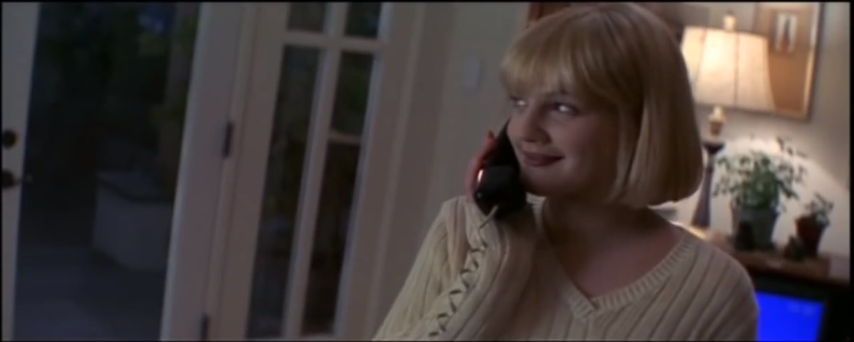
This film is notorious for being the iconic example of a "slasher" film, in which the characters are slowly killed off before a final character defeats or unveils the murderer, who usually has some link to the victims. The opening sequence of Scream starts with a phone call from a mysterious, creepy man with a gravelly voice asking the protagonist personal questions, before threatening her. The chilling voice combined with the threats make this opening very conventional of the genre.

Form and Style of Opening


The mans gravelly, chilling voice through the phone is intimidating and scary, so even when he is asking innocent questions at the beginning of the extract such as "Who is this...what number is this?" the audience feels a sense of foreboding. The way the audience suspects the phone caller is evil from the start (from the sound of the voice and the manner of speech) yet the protagonist does not, making her seem more innocent and vulnerable. This is one way we are made to sympathize and care for the character. The title is of a black screen with the white text "Scream" on it. This is followed by a scream and the sound of a knife chopping flesh, and the text turns red, connoting blood. This is mixed in with the sound of a phone ringing, which is the first shot shown, emphasizing the importance of the phone call, and the phone as being a metaphor for the murderer. Furthermore the title "scream" connotes terror, and violence; something we soon find is a prevalent key theme in the film.
 

Film Language - Telling the Story


The phone prop acts as the only way we interact with the murderer, as we cannot see him. Therefore the phone becomes a metaphor for him, so when she runs around holding the phone it is as though she can't escape him because he always accesses her through it. In terms of costume and location, she is an attractive, made-up young woman in a comfortable-looking homely jumper; making her seem more realistic and vulnerable to the audience. 
Furthermore the house is a normal, homely house which makes the sequence even more realistic the target audience; increasing the audiences ability to relate to the fear of the character. Camera angles are considered to increase the sense of foreboding the audience feels in the sequence, for example during the phone call a canted, or "dutch", angle is used, making the audience sub consciously feel that something is fundamentally wrong in the scene. 


First call [Normal angle]

Second Call [Canted angle]

 Narrative


"Scream" relies on the audiences ability to relate to the character in order to make them sympathise with her as she spirals towards her inevitable death. This is why the character is a stereotypical young lady, preparing to watch a film just like the audience is, cooking popcorn in her normal looking home. This regular character is made to match the target audience of the film, so that they feel as though they are in a similar situation as her and thus experience the fear on a greater level. Furthermore the juxtaposition of such horrific events in such a comfortable, homely location creates a sickening sort of antithesis that troubles the audience and emphasises the fear they feel (if they are reading the text correctly).

Media Audiences


The target audience for "Scream" is 15-20 year old male and females, because the character is of a similar age and ironically a similar situation to the audience, about to watch a horror movie (within the horror movie) the audience can relate to her better. 

Ideological Discourse


The target audience for slasher/horror films is predominantly males aged 15-25, so as a result this opening scene is tailor-made to affect people of that description the most. This is why the protagonist is a stereotypical blonde woman, who is shown to be vulnerable and terrified. The ideological discourse in the scene presents the woman as fundamentally vulnerable and in need of rescue. The predominantly male audience watching this film would see this and (if they read the text in the desired manner) feel the need to protect her, forcing them to feel more emotionally attached to her. This character is quite a regressive representation of women, as she is shown to be weak and scared, crying for her male partner when in need of protection. This scene therefore promotes dominant, or perhaps residual ideologies of women as weak people in need of a mans protection.